
George III neoclassical style sterling silver tea caddy
George III neoclassical style sterling silver tea caddy
9670
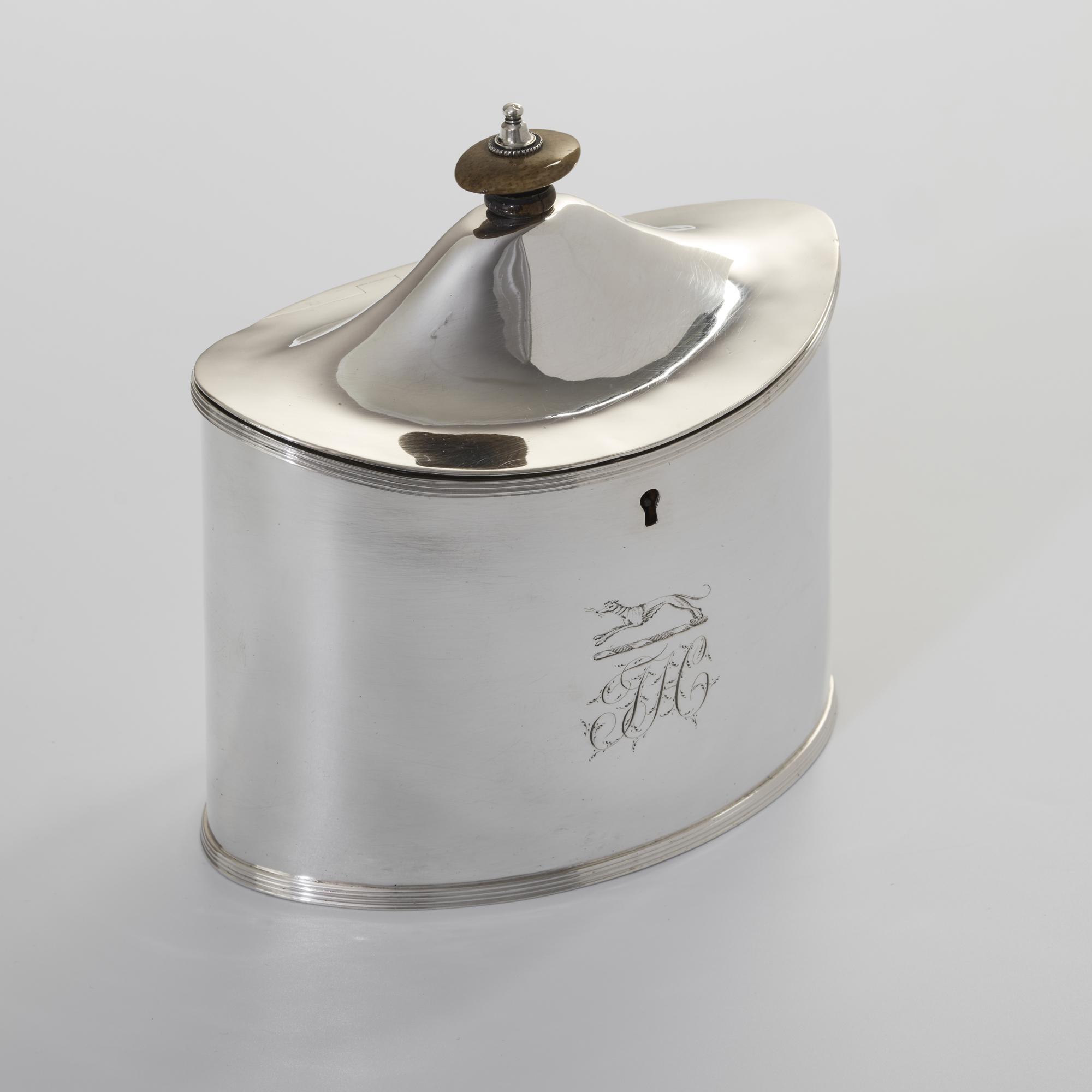
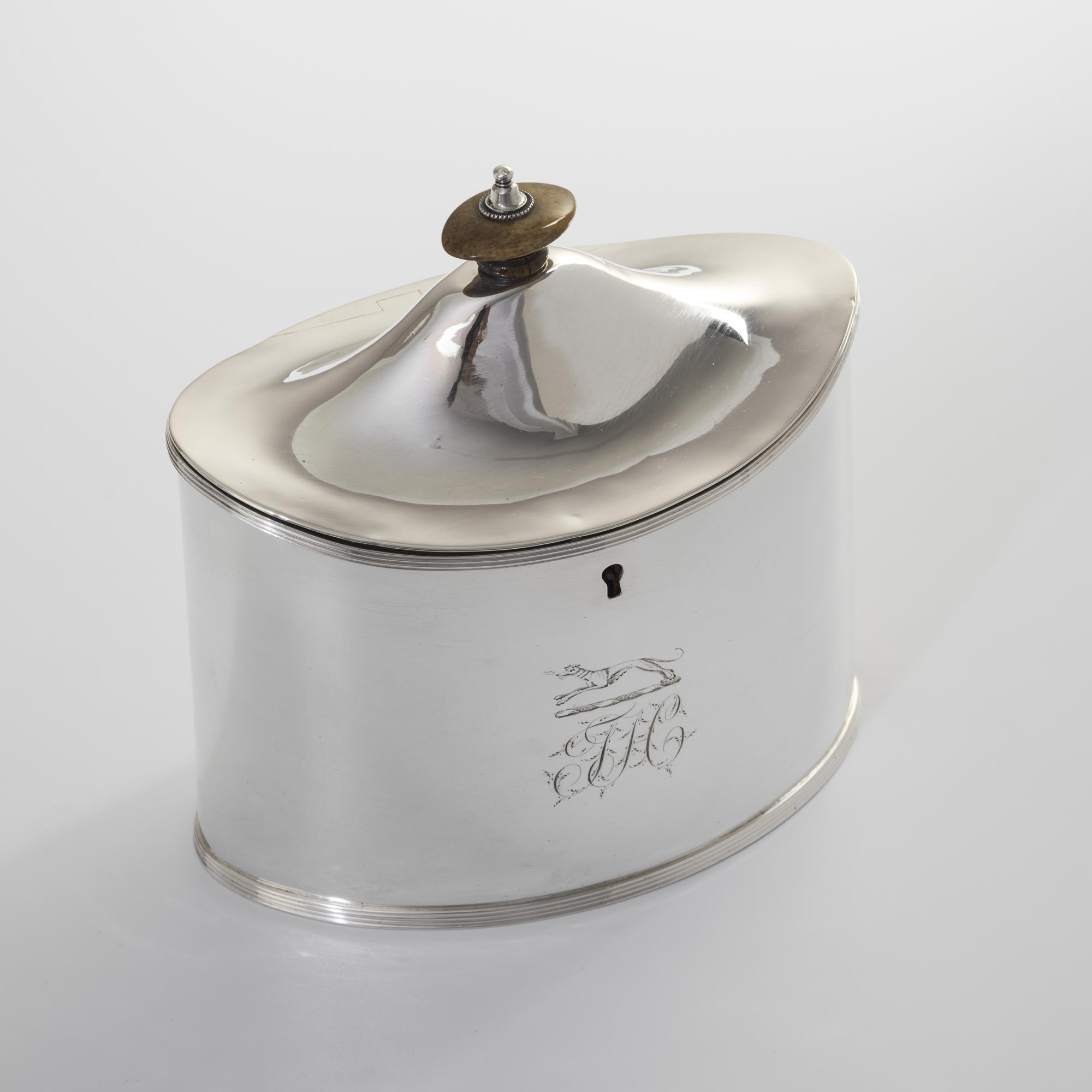
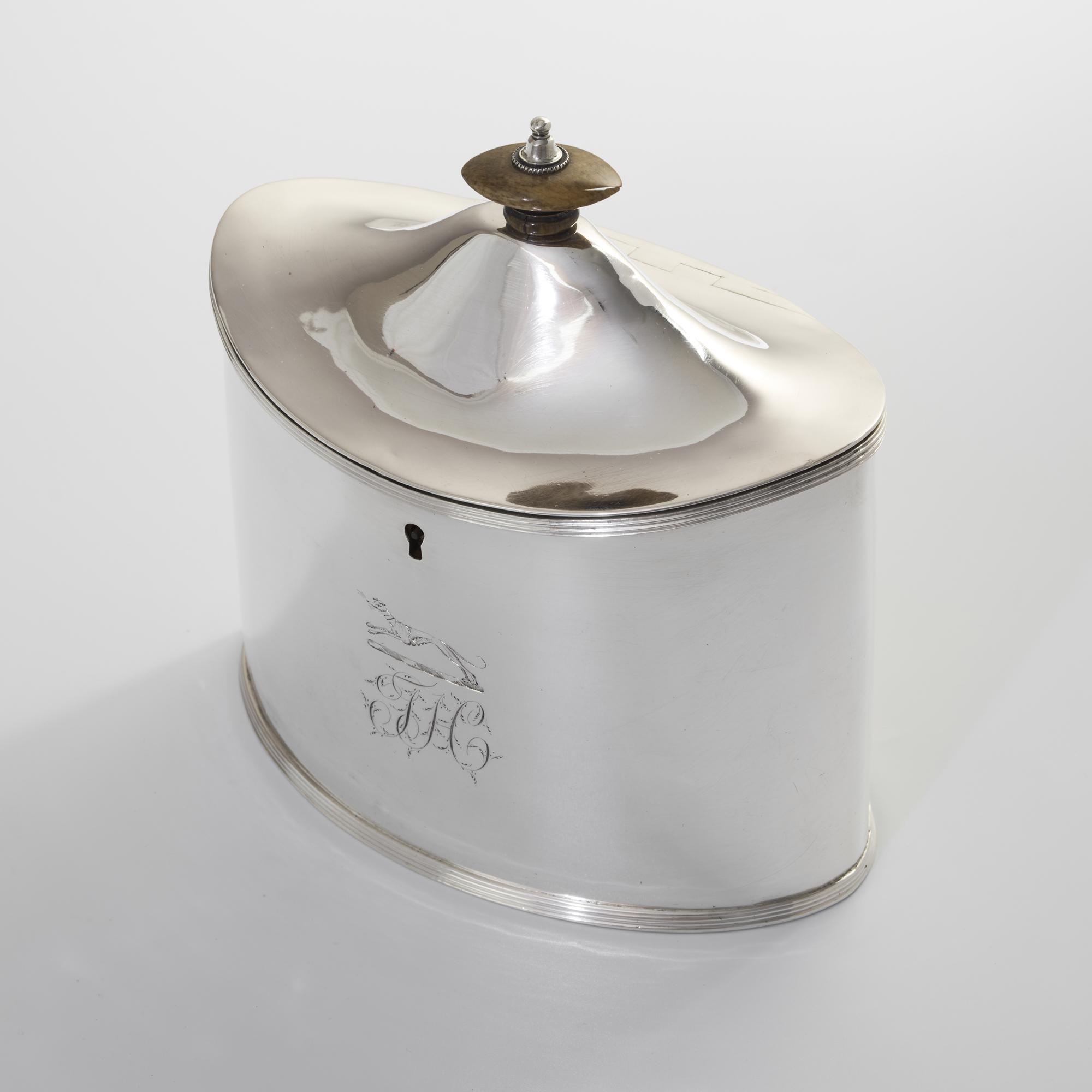
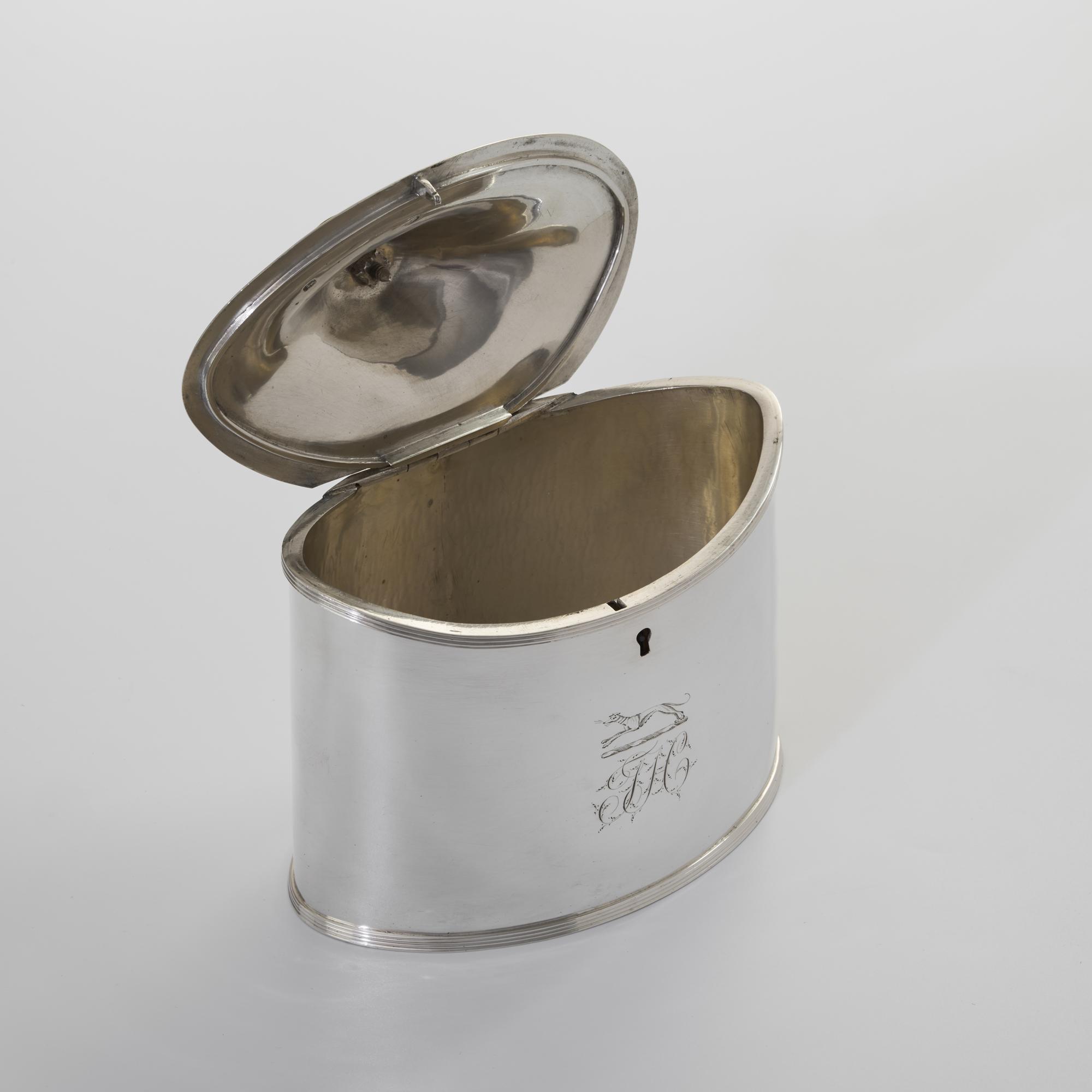
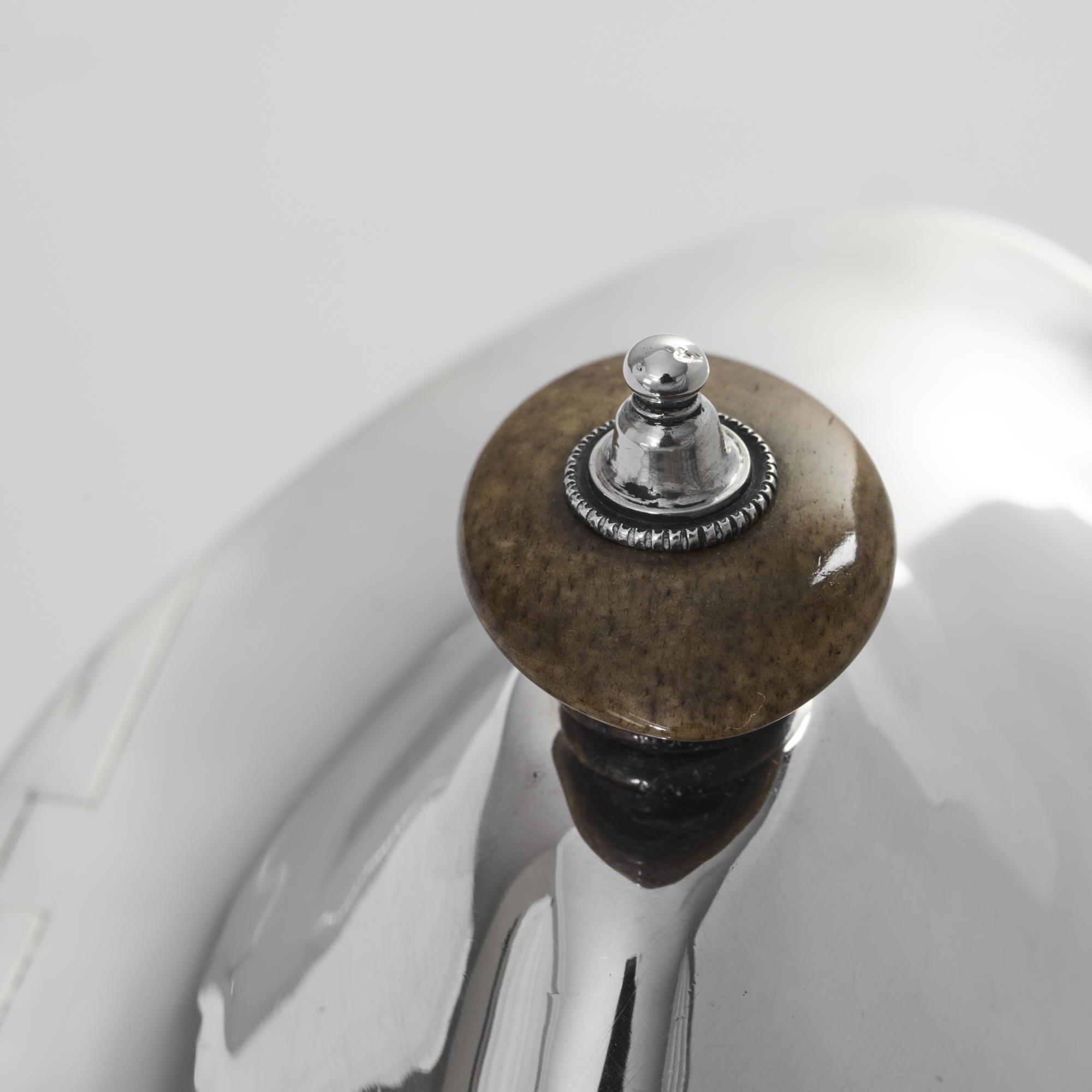
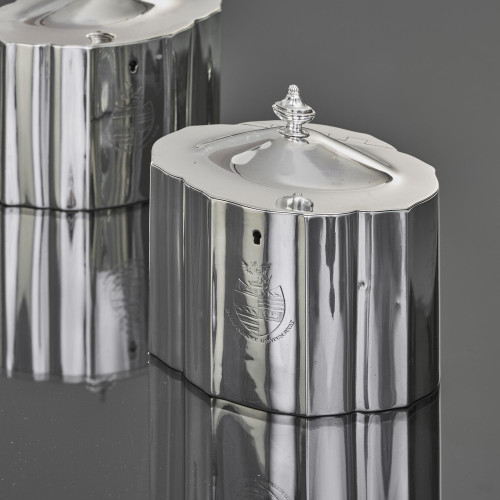
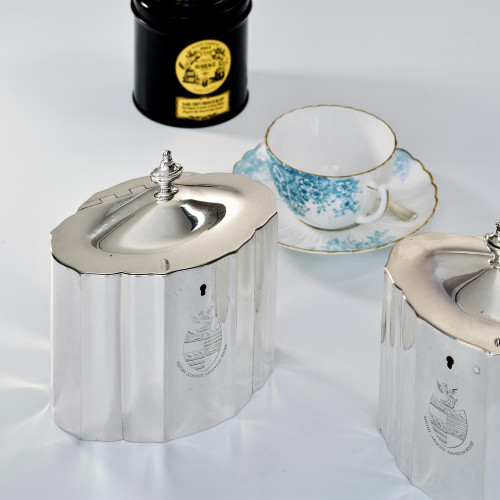
Antique neoclassical revival style sterling silver tea caddy made during the latter part of the 18th century. The oval, urn-shaped body has a hinged cover surmounted by a detachable oval fruitwood finial and delicate silver bead-pattern adornment. Decorative reeded bands encircle the top and bottom of the body.
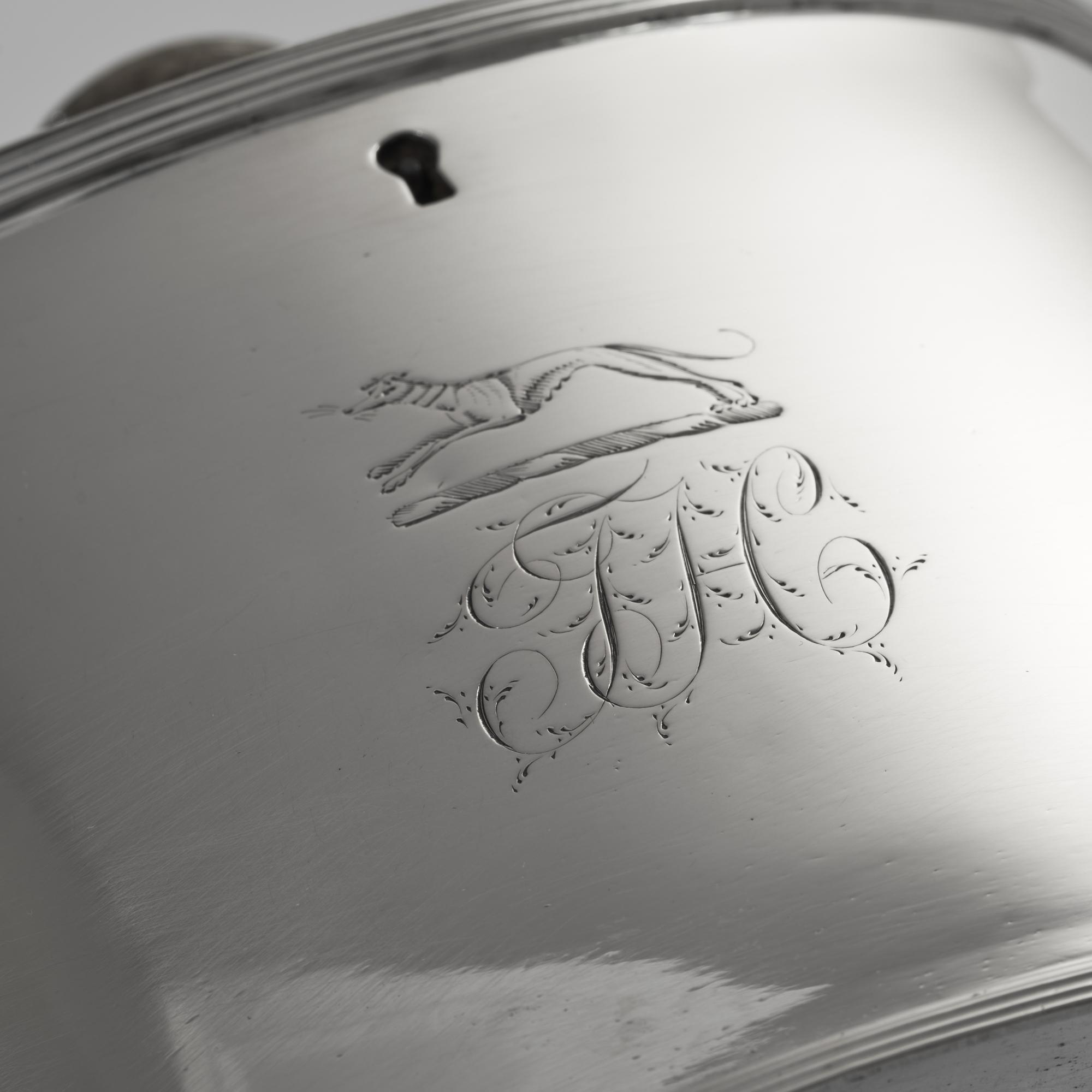
The front of the caddy is hand engraved with three entwined initials surmounted by a family crest of a greyhound. The tea caddy belonged to Sir Owen Henry Philipps Scourfield, 2nd Baronet of the Mote and of Williamston (1847-1921) who was an MP for Havorfordwest.
Tea drinking in England became fashionable and hugely popular among the wealthy from the late 17th century. For most of the 18th century, import duties and the East India Company's monopoly on importing tea kept the price of tea artificially high making it a very expensive commodity. This in turn established the need for airtight, lockable tea canisters and chests, not only to preserve the tea's distinctive flavours, but to protect the precious contents.
Commensurate with the high value of the contents, tea caddies became treasured and valuable accessories in their own right often made in fine porcelain or silver, and invariably fitted with a key.
By the end of the 18th century tea canisters and chests were referred to as tea caddies. The word caddy is thought to derive from the Malay word "kati" which was a measure of tea weighing about one imperial pound.
Dimensions:
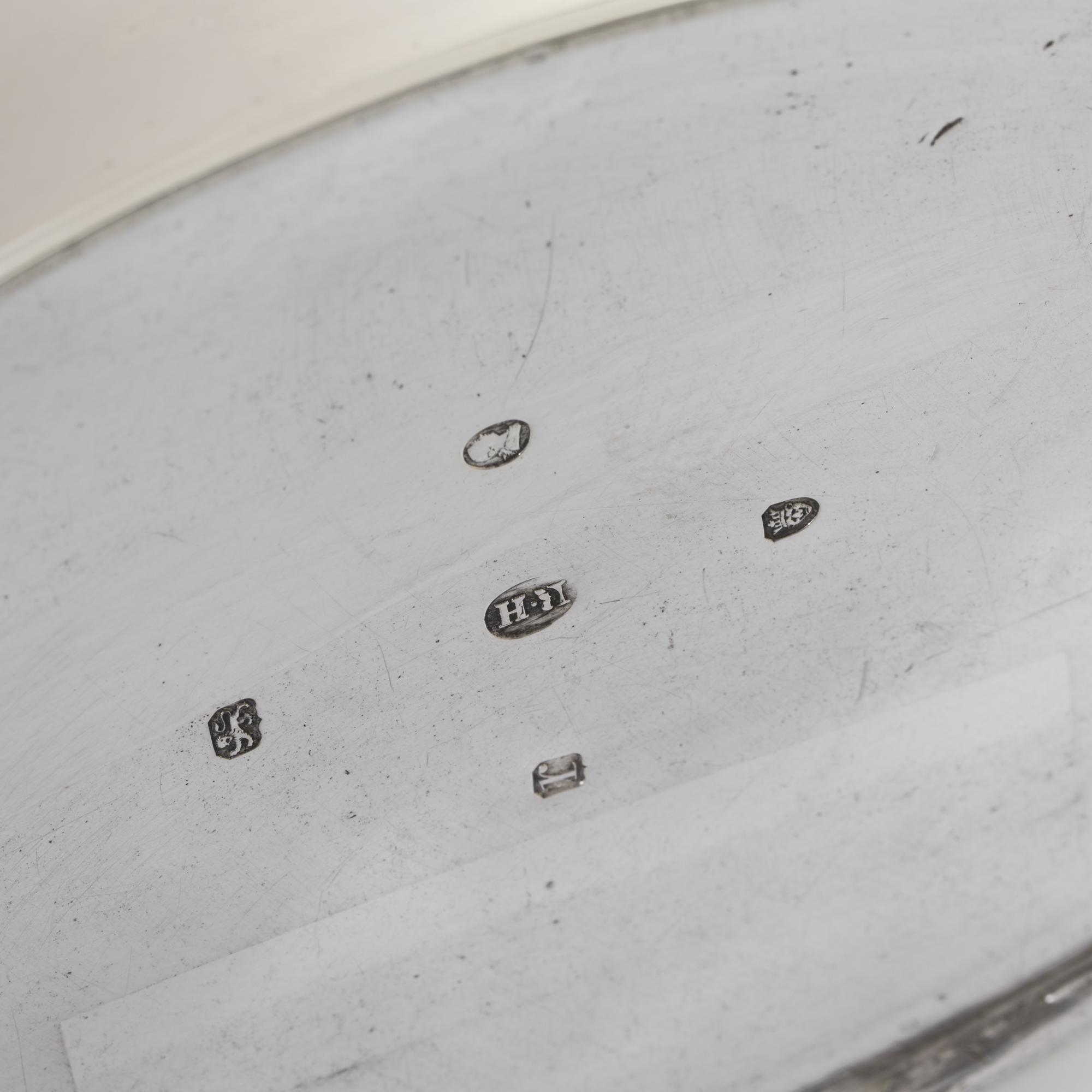
1792
London
Excellent
YOU MIGHT ALSO LIKE






 who was an MP for Havorfordwest.Tea drinking in England became fashionable and hugely popular among the wealthy from the late 17th century. For most of the 18th century, import duties and the East India Company's monopoly on importing tea kept the price of tea artificially high making it a very expensive commodity. This in turn established the need for airtight, lockable tea canisters and chests, not only to preserve the tea's distinctive flavours, but to protect the precious contents. Commensurate with the high value of the contents, tea caddies became treasured and valuable accessories in their own right often made in fine porcelain or silver, and invariably fitted with a key. By the end of the 18th century tea canisters and chests were referred to as tea caddies. The word caddy is thought to derive from the Malay word "kati" which was a measure of tea weighing about one imperial pound.)